Outdoor recipes
Cooking outdoors is one of the great pleasures of camping, but it is also where most trips quietly go wrong: food spoils, equipment buries itself at the bottom of a bag, and meals take an hour to produce when everyone is already hungry. This pillar page on outdoor recipes brings together the full picture — from menu planning and food safety to packing your camp kitchen so that cooking becomes a pleasure rather than a chore. Think of it as the map; the detailed articles in this category are the individual trails.
What Makes an Outdoor Recipe Different?
An outdoor recipe is not simply a home recipe carried into nature. It obeys a different set of physical constraints: no reliable refrigeration, limited water, one or two heat sources, and minimal washing-up capacity. A good outdoor recipe is therefore built around three pillars — ingredient stability, cooking simplicity, and waste minimisation.
A useful analogy: cooking at home is like chess on a full board, while cooking at camp is like playing with half the pieces removed. The skill lies not in complexity, but in choosing dishes that deliver maximum satisfaction with minimum logistics. A one-pot pasta with tinned tomatoes, chorizo and dried herbs often beats an ambitious three-course attempt that collapses because the cream turned before day two.
Planning Menus That Survive the Trip
The foundation of successful camp cooking is menu design. Beginners often plan as if the campsite had a supermarket next door; experienced campers plan around the shelf life of every ingredient.
The Three-Tier Ingredient System
Organise your shopping list into three tiers:
- Ambient-stable ingredients — pasta, rice, couscous, oats, tinned vegetables, tinned fish and meats, dried fruits, hard cheeses, oil, spices. These form the backbone of every meal, from day one to the last morning.
- Short-life fresh produce — leafy greens, soft fruit, fresh milk. Use these in the first 24 to 48 hours only, and have a tinned or dried alternative ready for later days.
- Cold-chain items — raw meat, dairy desserts, opened sauces. These demand a properly managed cool box or a 12V fridge, and strict consumption order.
A practical three-day menu built mostly on tier one might look like this: overnight oats with dried fruit for breakfasts, wraps with tinned tuna and hard cheese for lunches, and one-pot dinners such as chilli sin carne (tinned beans, rice, spices) or a sausage-and-lentil stew. Fresh produce appears only on day one — perhaps adding avocado to the first lunch and fresh tomatoes to the first dinner.
When Fresh Becomes Risky
There is a clear decision point every camper should recognise: once temperatures exceed roughly 20°C and your cooling capacity is limited, fresh meat and soft produce move from “delicious” to “hazard” within a day. Switching to tinned and ambient alternatives is not a downgrade — it is the mark of a cook who understands the environment. The danger zone between 5°C and 60°C is where bacteria multiply fastest, and a car boot in summer can easily reach 40°C.
Food Safety: The Silent Foundation of Every Camp Meal
No outdoor recipe works if the food behind it is unsafe. Cross-contamination is the most underestimated risk in camp cooking — and studies of camping cool boxes suggest that a majority are packed in a way that allows raw juices to contact ready-to-eat food.
The Packing Error That Spreads Bacteria
The classic mistake: placing raw meat on the top shelf or loose in the cool box, where meltwater and condensation drip onto cheese, fruit and bread below. The fix is structural, not behavioral willpower:
- Always store raw meat in a sealed, leak-proof container at the bottom of the cool box.
- Keep ready-to-eat items above and separated, ideally in their own sealed boxes.
- Use separate cutting boards or wash thoroughly between raw and cooked handling.
- Freeze meat before departure — it acts as an ice pack for the first day and thaws safely in time for cooking.
Cooling Strategy: Passive Cool Box or 12V Fridge?
For trips up to three days, a well-packed passive cool box can hold a safe temperature without refills. The technique matters more than the equipment: pre-chill the box the night before, use frozen water bottles rather than loose ice, fill every air gap (air is the enemy — it melts ice fast), and keep the box in shade with a wet towel over the lid. For five-day trips without power for a cooler, a 12V compressor fridge generally wins on reliability, provided your vehicle battery setup can sustain it. The short version: passive cooling is a skill, electric cooling is an infrastructure choice.
Packing the Camp Kitchen: Speed and Protection
Even the best menu fails if you cannot find your matches. Kitchen packing is where outdoor recipes meet logistics, and small errors compound daily.
The 30-Second Breakfast Rule
Your first morning sets the tone for the trip. Pack so that breakfast equipment is reachable within 30 seconds of opening the vehicle or storage box: a dedicated “breakfast pod” containing the stove head (if used for coffee), coffee or tea kit, oats, mugs and spoons, placed last into the car and therefore first out. Everyone wakes up grumpy; design for the grumpy version of yourself.
The Stacking Error That Costs Ten Minutes Per Meal
Loose packing turns every meal into an archaeology session — digging through bags to reach the pot buried under the tent. The cure is deliberate layering: cookware together, food together, consumables together, with the items needed at every meal on top. Modular storage boxes outperform loose packing on every multi-day trip because each module has one job and returns to its place after use. Pack the kitchen the evening before departure, not the morning of: morning packing under time pressure is how spoons, spices and can openers get left behind.
Protecting Fragile Gear Off-Road
Off-road driving is brutal on cookware. Pots nest with a cloth between each; glass jars (oil, honey, spices) travel in a rigid, padded container, ideally sealed in individual zip bags so a break never becomes a disaster. Fill empty pots with soft items — the space does double duty.
Core Techniques Every Camp Cook Should Master
- One-pot cooking: the gold standard. Fewer dishes, less water use, richer flavours as starches thicken the sauce.
- Boil-in-bag and foil-pocket meals: near-zero washing up, ideal for short water supplies.
- Pre-cooking at home: brown the meat or cook grains in advance; reheating at camp is faster and safer than cooking raw protein on an unstable flame.
- Thermal cooking: bring grains or legumes to a boil, seal in an insulated container, and let residual heat finish the job — fuel saved is fuel earned.
Your Outdoor Recipes Action Plan
Put it all together in five steps: build your three-tier ingredient list; draft a menu where fresh items appear early and tinned items cover the rest; pack the cool box with raw meat sealed at the bottom; create a breakfast pod and modular kitchen boxes the night before; and pad every fragile item for the drive. Follow this sequence and each article in this category — from cool box packing to menu building — will slot naturally into place. Outdoor recipes reward preparation more than talent, and every well-executed camp meal is proof that a little structure buys a lot of freedom.
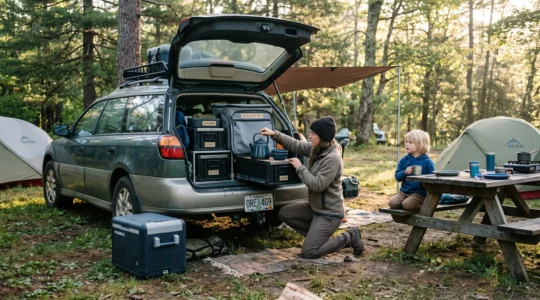
How to Pack Cooking Gear Efficiently for Accessible Meal Preparation at Campsites?
A frying pan buried beneath sleeping bags can turn a simple campsite lunch into an exhausting vehicle-unpacking exercise. The problem is rarely a lack of storage space. More often, cooking…
Lire la suite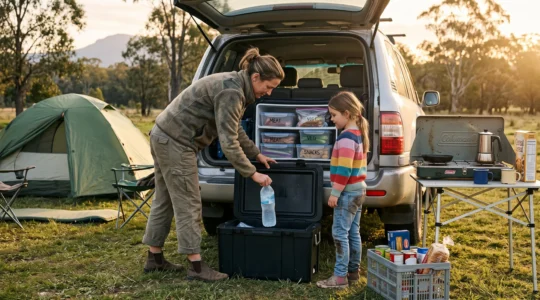
How to Pack and Store Perishable Meals in a Vehicle During Multi-Day Camping?
Keeping food safe during a three-to-five-day camping trip requires more than loading a cool box with ice packs. A vehicle may spend hours in direct sunlight, food containers are repeatedly…
Lire la suite