Itineraries & Road Trips
A great camping trip rarely begins at the campsite. It begins weeks earlier, with a map, a pencil and a series of honest questions: how far can we realistically travel each day, where will we sleep, what happens if the weather turns, and what will it all cost? Itineraries and road trips are the backbone of every successful camping adventure, and planning them well is the difference between a journey you remember fondly and one you barely survive. This pillar page brings together the essential concepts of route planning — from wilderness expedition design to fuel-saving road trip tactics — so you can approach your next trip with confidence.
Why Itinerary Planning Is the Foundation of Every Camping Trip
Think of an itinerary as the skeleton of your trip: everything else — gear, food, budget — hangs on it. A well-designed route answers three questions before you leave: where you will be each night, how much ground you will cover each day, and what your exit options are if things go wrong. Without that structure, even experienced campers make costly mistakes. Planning errors are consistently cited as a leading reason trips fail, with weather misjudgement alone stranding a large share of campers in genuinely dangerous conditions.
The good news is that route planning is a skill, not a talent. It follows logical principles that anyone can learn, and this guide will walk you through them step by step.
Designing Multi-Day Wilderness Expeditions
Remote expeditions — whether a three-day coastal hike or a week in the highlands — demand a different mindset from a weekend at a serviced campsite. The core challenge is balancing adventure with safety. The best expeditions build in checkpoints: resupply points, road crossings, or villages where you can bail out, restock or call for help.
Calculating Realistic Daily Distance
The most common rookie error is overestimating how far you can walk. A useful rule of thumb: on flat, easy terrain with a light pack, plan 15–20 km per day. Add a loaded backpack (15–20 kg), hills, or rough ground, and that figure drops to 10–12 km. A simple analogy: your loaded pack acts like a permanent headwind — it slows everything down. Plan conservatively, then let good days surprise you rather than letting bad days break you.
Circular Routes Versus Linear Expeditions
For a first multi-day trek, the format question matters more than the destination:
- Circular route: starts and ends at the same point. Simpler logistics, no car shuttles, and easy to shorten mid-route. Ideal for beginners.
- Linear expedition: point A to point B. More adventurous and varied, but requires transport at both ends and leaves no easy retreat option.
Water, Rest Days and Weather Windows
Water planning deserves special attention — running out of water on day two is a classic failure mode of remote expeditions. Map every reliable water source, not just on your route but within a detour’s reach, and carry capacity for at least one dry camp. Build rest days into longer itineraries: rather than losing momentum, they consolidate it, letting muscles recover and giving you a buffer when a storm day forces you to stop. Finally, study seasonal weather patterns before fixing dates, and design your route so that every stage has a bad-weather alternative.
Planning the Driving Side of a Road Trip
For vehicle-based camping trips, the itinerary is less about footsteps and more about geography and economics. Two planning habits can transform both your budget and your enjoyment.
Grouping Campsites Geographically
Instead of zigzagging between far-flung attractions, cluster your campsites by region. Grouping stops geographically can cut total driving distance by as much as 40% — an analogy worth remembering: it is cheaper to move your base and radiate outward than to relocate your entire household every morning.
Cutting Fuel Costs Without Cutting Experiences
Fuel is often the largest variable cost of a road trip. Several levers help:
- Route choice: for a 200-mile journey, compare motorways against A-roads. Motorways are faster but A-roads can consume less fuel per mile at steady lower speeds — though the difference depends on traffic and terrain.
- Speed: driving just 10 mph slower on long motorway stretches improves aerodynamic efficiency noticeably and can save around £80 on a long camping road trip.
- Refuelling strategy: filling up at half-tank rather than quarter-tank gives you the freedom to choose cheaper stations near your route instead of paying desperation prices at the first garage available. Apps and price-comparison tools make finding cheap fuel within a few miles of your route straightforward.
Adapting Your Itinerary to the Environment
Every environment imposes its own constraints on route design. Treating each terrain as a distinct planning problem is what separates a competent planner from a great one.
Hot and Humid Climates
In regions where humidity exceeds 80%, your itinerary should favour shaded campsites, shorter midday stages and generous ventilation at camp. Choose clothing accordingly, protect electronics in sealed dry bags, and plan a thorough gear-drying and cleaning routine afterwards — mould damage after a humid trip can quietly cost hundreds in ruined equipment. In temperate coastal regions such as Cornwall, the driest and most comfortable camping seasons sit at the shoulder of summer, when humidity drops and crowds thin.
Coastal Roads
Coastal scenic routes are spectacular but corrosive: salt spray accelerates rust, especially on vehicles more than seven years old. Practical habits include rinsing the car thoroughly after coastal driving, parking facing away from the sea at clifftop campsites, timing coastal stretches for lower salt exposure, and applying protective pre-treatment to vulnerable panels before a salt-heavy trip.
Mountain Passes Above 1,000 Metres
Altitude changes both your car and your body. Engines lose roughly 10% of power for every 1,000 metres gained, which explains why a fully loaded vehicle struggles on climbs even in perfect condition. Key planning points:
- Prepare the vehicle: brakes, coolant and tyre pressures set to the manufacturer’s load specifications.
- Acclimatise: stop and rest when you feel persistent headache or nausea above altitude thresholds rather than pushing on.
- Know your turn-back conditions: incoming cloud, sleet, or deteriorating roads are signals, not inconveniences.
Forest Tracks and Unsurfaced Roads
Forest tracks open up wonderful camping access but demand care. Verify that a track is legally open — rights of way rules differ sharply between countries — drive slowly enough to avoid damaging vegetation, and think twice before continuing when tracks turn muddy and rutted. Under dense canopy, GPS often fails, so carry a paper map and compass. And if you must enter deep forest by vehicle, remember the golden rule: reversing out along your entry route is far safer than hunting for a turning point at the dead end.
Finding the Places: Beaches, Viewpoints and Quiet Campsites
The best itineraries blend iconic stops with quieter discoveries. Secluded beaches reward research: Ordnance Survey maps and terrain analysis reveal coves hidden from the road, and checking access rights, tide times and realistic parking before a 50-mile drive prevents both trespassing fines and disappointment. Visiting at dawn or dusk adds solitude and better light. A beach that stays empty even in peak summer usually has a reason — difficult access, few facilities or limited awareness — which is exactly what makes it precious.
A Simple Planning Workflow You Can Reuse
- Define the theme: coastal, mountain, forest or mixed — this shapes everything else.
- Map the cluster: choose a region and group campsites, water sources and attractions geographically.
- Budget the distances: apply realistic daily figures for hiking, or hourly driving figures with fuel stops for road trips.
- Layer in the safety net: checkpoints, rest days, weather alternatives and exit routes.
- Optimise the costs: route type, cruising speed and refuelling points.
- Review terrain-specific risks: humidity, salt, altitude or track legality.
An itinerary is never a cage — it is a safety net that makes freedom possible. With realistic distances, clustered campsites, cost-aware routing and terrain-specific preparation, your next camping road trip becomes what it should be: an adventure you planned well enough to enjoy completely. Browse the detailed articles in this category to go deeper on each of these themes, one route at a time.
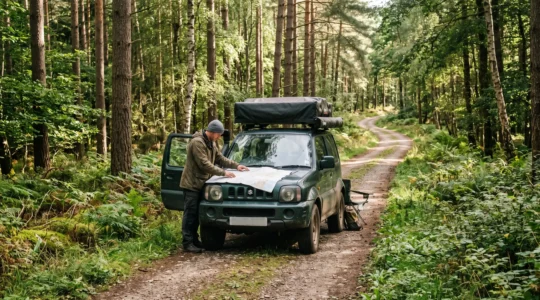
How to Drive Through Forest Tracks Without Damaging Ecosystems or Getting Lost?
Driving through woodland without damaging it starts long before the wheels reach the first forest junction. A track may appear accessible but carry no public motor vehicle rights. A dry…
Lire la suite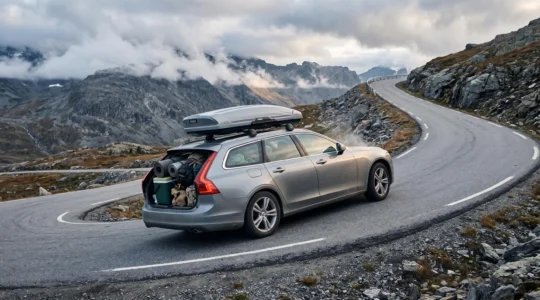
How to Prepare for Mountain Pass Driving Above 1,000 Metres Elevation?
Driving above 1,000 metres changes the demands placed on a vehicle, even when the road is paved and the weather looks favourable. Thinner air can reduce engine output, steep gradients…
Lire la suite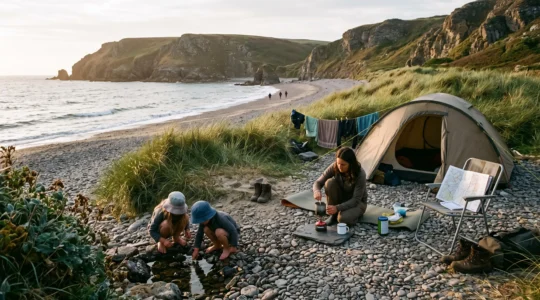
How to Find Uncrowded Beaches Near Camping Sites During Peak Season?
Finding an uncrowded beach near a campsite during peak summer is less about discovering a secret location than understanding why some stretches of coastline attract fewer visitors. Distance from parking,…
Lire la suite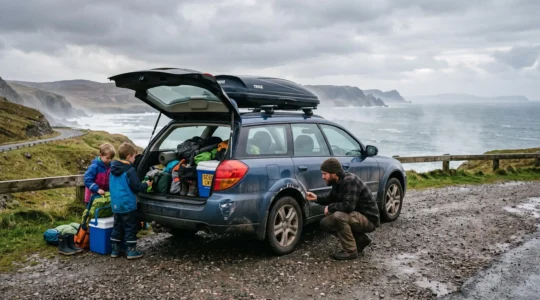
How to Enjoy Coastal Scenic Routes Without Accelerating Vehicle Rust Damage?
Coastal scenic routes combine spectacular ocean views with an environmental hazard that can remain invisible long after the journey ends: airborne sea salt. Even when a vehicle never touches seawater,…
Lire la suite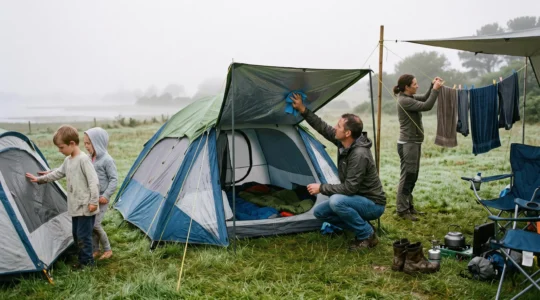
How to Select and Prepare for Camping in High-Humidity Tropical Environments?
Camping in humid conditions changes how clothing, shelter and equipment behave. A shirt that dries quickly on a breezy British hillside may remain damp overnight in tropical heat. A tent…
Lire la suite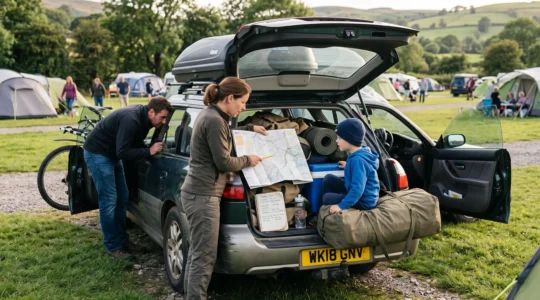
How to Plan Camping Routes That Minimise Fuel Costs Without Sacrificing Destinations?
A cheaper camping road trip does not necessarily mean visiting fewer places. The biggest opportunity often lies in changing the order of destinations, selecting better-positioned campsites and avoiding unnecessary return…
Lire la suite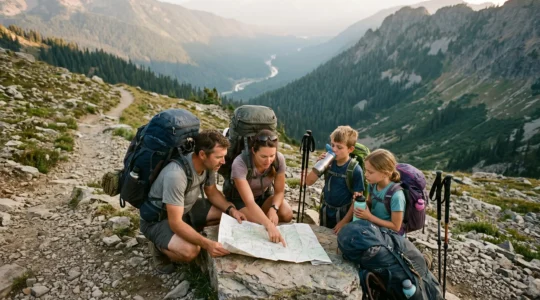
How to Design Camping Expeditions That Balance Remote Adventure With Safety Checkpoints?
A multi-day wilderness expedition becomes manageable when every demanding section has a defined entry decision, a realistic completion window and a credible alternative if conditions deteriorate. The aim is not…
Lire la suite