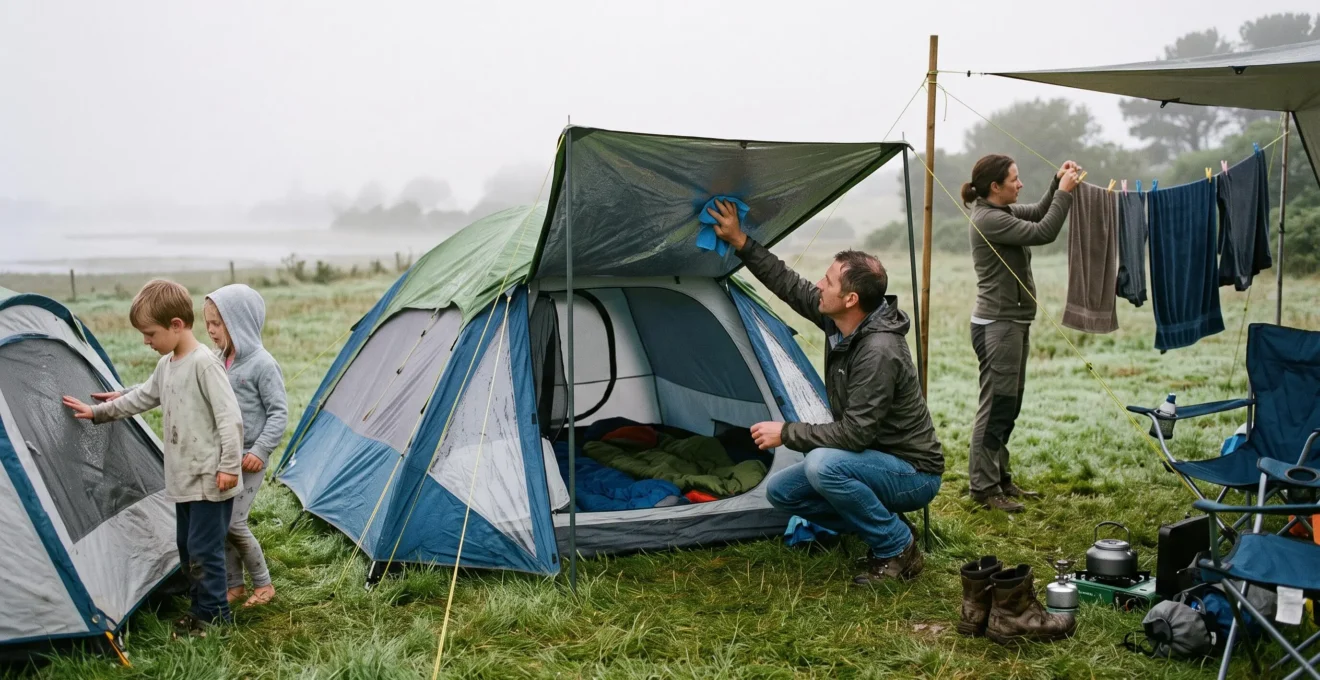
Camping in humid conditions changes how clothing, shelter and equipment behave. A shirt that dries quickly on a breezy British hillside may remain damp overnight in tropical heat. A tent that feels reassuringly sealed against rain can accumulate condensation inside. Even equipment that survives a wet trip may deteriorate if packed away before drying.
These challenges affect tropical destinations and humid coastal regions such as Cornwall, although the climates are not identical. Tropical campsites may combine persistently warm nights, heavy rainfall and insects, while Cornwall adds Atlantic winds, cooler evenings and rapidly changing weather.
The most effective preparation is therefore not simply buying waterproof equipment. It means choosing fabrics that remain comfortable when evaporation slows, balancing ventilation with weather protection, separating wet and dry gear, and planning how everything will dry after the trip.
For first-time humid-region campers, a few deliberate changes to packing and daily routines can prevent considerable discomfort and avoidable equipment damage.
High-humidity camping essentials
- Choose loose, quick-drying clothing and a tent that combines adjustable ventilation, appropriate insect mesh and reliable rain protection.
- Manage moisture throughout the trip: ventilate the sleeping area, isolate wet equipment and protect electronics from liquid water.
- Dry tents and sleeping bags completely before storage, and choose travel dates using local climate patterns rather than temperature alone.
- How to Select Clothing That Stays Comfortable in 80%+ Humidity Camping?
- Mesh Tent or Solid Tent: Which Balances Airflow and Insect Protection in Humid Heat?
- The Post-Trip Mistake That Causes £200 Worth of Mould Damage to Camping Gear?
- How to Protect Phones and Power Banks From Humidity Damage While Camping?
- When Is the Best Season to Camp in Humid UK Regions Like Cornwall?
- How to Dry Tents and Sleeping Bags Thoroughly Enough to Prevent Mould Growth?
- The Clothing Error That Makes You Sweat Going Up Then Freeze at the Top?
- How to Prevent Moisture Accumulation That Destroys Camping Equipment?
How to Select Clothing That Stays Comfortable in 80%+ Humidity Camping?
For camping in humidity above 80%, prioritise loose-fitting clothing that allows airflow, dries reasonably quickly and remains comfortable against damp skin. Lightweight synthetic fabrics and suitable merino blends are useful choices, while tightly fitted technical layers may feel clammy when evaporation is limited. Carry a genuinely dry change of clothing for camp.
The important distinction is between moving moisture through fabric and actually evaporating it. A moisture-wicking label describes how a textile transports liquid away from the skin; it does not guarantee rapid drying when the surrounding air is already humid. High humidity reduces the vapour-pressure difference that drives evaporation, particularly when airflow is weak.
For warm, damp destinations, consider fabric construction as well as fibre content. Open-knit polyester, lightweight nylon and loose merino-blend garments can provide ventilation. A tightly fitted winter base layer may transport sweat efficiently but still retain an uncomfortable film of moisture during a humid hike.
The following comparison is qualitative: actual performance depends on fabric thickness, weave, garment construction, airflow and temperature.
| Criterion | Cotton | Merino wool | Polyester or nylon |
|---|---|---|---|
| Drying while worn | Often slow when saturated | Variable; lightweight blends perform better | Often relatively quick in thin, open constructions |
| Odour over several days | Can develop odour when repeatedly damp | Often resists odour comparatively well | Can retain body odours without washing |
| Overnight drying beneath a flysheet | Unreliable in still, humid air | Possible for lightweight items, not guaranteed | Usually the more practical option |
| Packability | Bulky when carrying spare sets | Good with lightweight garments | Generally compact and lightweight |
Cotton remains a reasonable comfort choice for short car-camping trips when dry replacements are readily available. It is less suitable as the only clothing option for multi-day walking routes, especially when rain and cool evenings are possible.
For warm rain, combine a lightweight base layer with a breathable waterproof shell that has effective adjustable ventilation. Open front zips or underarm vents when conditions allow, but close them when wind-driven rain threatens to enter. A high waterproof rating alone cannot prevent sweat accumulation inside a jacket.
Persistent dampness also affects skin health. Moisture and friction around the groin, feet, waistband and underarms can contribute to irritation and create favourable conditions for fungal problems such as intertrigo or tinea. Change into a dry base layer at camp, even when the walking shirt feels only slightly damp.
The best clothing system is one that allows you to manage sweat during activity and recover comfort when activity stops. The same ventilation principle should guide your tent choice.
Mesh Tent or Solid Tent: Which Balances Airflow and Insect Protection in Humid Heat?
A mesh-heavy inner tent is generally preferable for warm, humid nights when airflow and insect exclusion are priorities, provided its flysheet offers adequate rain protection. A more solid, low-profile tent may suit exposed coastal conditions better. Choose between them by balancing ventilation, insect-mesh fineness and storm resistance rather than mesh coverage alone.
In consistently warm destinations where night temperatures remain around 18–20°C or higher, substantial mesh panels can improve comfort. Opposing doors and vents make cross-ventilation easier, particularly when the tent can be pitched to catch a prevailing breeze without exposing its entrance to rain.
However, mesh does not remove the need for weather protection. During sustained tropical rain, the flysheet may need to remain fully pitched. Its clearance above the inner tent, vent positioning and tension become essential.
For exposed Cornish campsites, coastal wind can change the calculation. A stable, low-profile shelter with secure guy lines, adjustable upper vents and a properly tensioned flysheet may be more appropriate than a highly exposed mesh design.
Condensation explains why ventilation matters even when no rain enters the shelter. Occupants release water vapour through breathing, while wet clothing and humid outside air add moisture. When that air meets a cooler flysheet, water can collect on its underside and eventually drip.
According to REI‘s explanation of tent condensation, maintaining flysheet tension, removing wet equipment from the sleeping area and opening opposing vents can help reduce accumulation.
Insect protection requires a separate check. Fine biting midges can pass through mesh designed primarily for larger mosquitoes. This is particularly relevant to parts of western Scotland and other suitable midge habitats; exposure varies substantially between locations. Look for manufacturer-specified fine midge mesh, and consider a suitable head net for evenings outside the tent.
Check three things before buying: whether the flysheet remains ventilated in rain, whether the inner mesh excludes the insects expected at your destination, and whether the structure is rated for the forecast exposure.
A well-chosen shelter reduces nightly condensation, but even the best tent cannot compensate for equipment being stored wet after the journey.
The Post-Trip Mistake That Causes £200 Worth of Mould Damage to Camping Gear?
The damaging mistake is leaving damp tents, sleeping bags and other camping equipment compressed in sealed storage bags after returning home. Trapped moisture can encourage mould and damage waterproof coatings. A £200 replacement bill is a plausible illustrative scenario involving several affected items, not a verified average or guaranteed consequence.
After a wet camping trip, it is tempting to leave packed equipment in the car boot, garage or hallway until the following weekend. Unfortunately, compressed fabric provides little opportunity for trapped moisture to escape. Warm storage conditions can increase the risk of microbial growth.
There is no universal 24–48-hour threshold at which mould necessarily begins. The outcome depends on temperature, moisture, contamination, material and ventilation. The sensible rule is to unpack wet gear as soon as practical rather than treating a particular number of hours as safe.
Moisture can also contribute to deterioration of polyurethane waterproof coatings. Persistent tackiness, flaking or an unpleasant coating odour may indicate material breakdown, although not every coating problem is caused by one damp storage episode.
Illustrative £200 equipment-loss scenario
Consider a hypothetical camper who returns from a rainy weekend and stores a damp tent alongside two sleeping bags and wet footwear. If several items subsequently need cleaning, specialist treatment or replacement, the combined expense could reach £200.
This is a budgeting illustration, not a documented incident or typical loss estimate. Actual costs depend on the condition and value of the equipment, and many damp items can be recovered through prompt, appropriate drying.
A safer return-home procedure is straightforward:
- Remove equipment from sealed bags as soon as practical after arriving home.
- Pitch or hang the tent in a ventilated, sheltered location and separate its components.
- Open sleeping bags fully and allow boots, groundsheets and accessories to dry independently.
- Inspect seams, folds and other moisture-trapping areas before packing anything away.
- Store completely dry equipment loosely in a cool, dry space.
REI’s specialist tent-storage guidance explains that damp storage can promote mildew and compromise polyurethane coatings. It recommends complete drying and loose storage in breathable bags rather than long-term compression.
Do not automatically apply vinegar or household mould cleaners to coated fabrics. Although diluted vinegar is sometimes suggested as a cleaning remedy, compatibility with particular tent coatings is not established by the supplied equipment guidance. Follow the manufacturer’s care instructions and favour appropriate mild, non-detergent cleaning where recommended.
Keep visibly mould-affected items separate from clean equipment while assessing them. Avoid brushing or shaking mouldy fabrics indoors, and consider professional advice if contamination is extensive.
Preventing storage damage protects the value of your equipment. During the trip itself, smaller moisture-sensitive items such as phones and batteries need a different form of protection.
How to Protect Phones and Power Banks From Humidity Damage While Camping?
Protect camping electronics with a waterproof pouch or suitable hard case during rain and transport, keep charging ports dry, and avoid charging devices when moisture is present. Reusable desiccant sachets can help manage moisture inside storage containers, but they are not a substitute for waterproof protection or careful temperature management.
Electronics face two different threats. Liquid water can enter through exposed ports or damaged seals, while condensation can form when equipment moves between different temperatures and humidity conditions. An IP67 or IP68 rating describes specific tested ingress-resistance conditions; it does not establish immunity to every prolonged camping exposure.
A practical protection system has three layers:
- External protection: use a properly closed waterproof pouch or case during heavy rain, paddling or transport through wet vegetation.
- Moisture management: place suitable silica-gel sachets inside the storage container, checking and regenerating or replacing them as their capacity is exhausted.
- Charging discipline: inspect ports and connectors before attaching cables, particularly after rain or large temperature changes.
For compatible iPhones, Apple‘s official liquid-detection instructions warn that charging through a wet connector can cause corrosion and permanent damage. Apple advises disconnecting the cable, allowing the connector to dry with airflow and avoiding external heat or objects inserted into the port. Complete drying can take up to 24 hours in some circumstances.
Power banks deserve similar care. Avoid placing them directly against wet tent fabric or leaving them where water can collect. A protected position within the main pack, separated from damp clothing, reduces accidental contact with liquid water. Do not wrap an actively charging power bank in insulating clothing, and follow its manufacturer’s operating-temperature guidance.
Battery conservation also reduces how frequently protective cases need opening. Download offline maps before departure, save campsite details locally, lower screen brightness and avoid unnecessary cellular searching in weak-signal areas.
Keep one emergency communication option accessible, but ensure the storage method does not prevent you from using it quickly when needed.
Weather preparation becomes easier when the destination and season are chosen with humidity, rainfall and wind exposure in mind.
When Is the Best Season to Camp in Humid UK Regions Like Cornwall?
Late May, June and September are useful periods to consider for camping in Cornwall, particularly for travellers seeking a balance between moderate temperatures, campsite availability and potentially quieter conditions. None guarantees dry weather. June has relatively favourable regional rainfall averages, while September offers an alternative outside the main summer holiday period.
Cornwall’s maritime climate brings comparatively mild winters, frequent Atlantic weather systems and substantial local variation. A sheltered inland campsite can experience very different wind and moisture conditions from an exposed coastal field.
The Met Office climate averages for St Austell and south-west England provide useful historical context. The supplied 1991–2020 figures for the wider England SW & Wales S district include the following monthly averages:
| Month | Rainfall | Daily maximum temperature |
|---|---|---|
| May | 75.01 mm | Not specified in supplied data |
| June | 78.80 mm | 18.35°C |
| July | 84.11 mm | Not specified in supplied data |
| August | 97.99 mm | Not specified in supplied data |
| September | 92.46 mm | 17.74°C |
| October | 139.55 mm | Not specified in supplied data |
These values describe a regional district extending beyond Cornwall, not the exact climate of any individual campsite. They are historical averages rather than forecasts. June’s lower average rainfall compared with August or October does not mean a particular June weekend will be dry.
78.80 mm
Average June rainfall for the wider England SW & Wales S district in the supplied Met Office 1991–2020 reference data, not a prediction for a specific Cornish campsite.
Met Office regional historical climate averages, 1991–2020.
For an actual trip, examine the location-specific forecast rather than the headline temperature alone. Rainfall timing and intensity, overnight temperatures, wind direction and exposure are especially important. Dew point can help indicate when surfaces may approach condensation conditions overnight, although it cannot by itself predict how wet a tent will become.
Onshore Atlantic airflow may bring damp conditions to exposed coastal pitches. Wind direction also affects where to position tent entrances and vents.
Booking requirements matter as much as weather. Some campsites operate seasonally, reduce facilities outside peak months or impose different rules for campfires. Confirm opening dates, showers, food storage, vehicle access and family facilities directly before committing.
Biting-insect activity can increase during suitable warm, sheltered and still conditions, although species and local habitats vary. Insect pressure should influence both the mesh specification and the clothing packed for evenings.
Even with careful timing, damp weather remains possible. Knowing how to dry equipment effectively is therefore an essential part of planning.
How to Dry Tents and Sleeping Bags Thoroughly Enough to Prevent Mould Growth?
Dry tents and sleeping bags by spreading or hanging them in a well-ventilated location until fabric, seams and insulation are completely dry. Wipe visible moisture from flysheets, keep sleeping bags open and inspect areas where water remains trapped. Do not rely on a quick overnight airing or direct radiator heat before long-term storage.
During a camping trip, use the first suitable dry interval to remove surface water. Wipe the underside of the flysheet with a clean microfibre cloth and, when conditions permit, expose damp surfaces to moving air. A flysheet may be draped or repositioned for drying only where it can be handled safely without damaging its coating or exposing the inner tent to rain.
At home, give equipment more space than it has inside its packing bag. A spare room, covered outdoor drying area or well-ventilated utility space can work. A fan may improve airflow, while direct heat from radiators or heaters can damage certain fabrics, adhesives or waterproof coatings.
Sleeping bags require particular attention because moisture can remain within insulation even when the shell fabric feels dry. Open the zip fully, distribute the filling gently and allow sufficient drying time. Down insulation can clump when wet, so restored loft throughout the bag is an important practical check, though it does not replace checking for remaining dampness.
Drying may take a full day or longer, depending on temperature, ventilation, equipment construction and how wet the materials became. There is no fixed drying duration that guarantees every item is ready for storage.
Inspect flysheet seams, folded hems, pole sleeves and the underside of the groundsheet. Feel for cool damp patches, but recognise that touch alone is imperfect. Persistent coating tackiness may indicate polyurethane deterioration rather than remaining water; drying will not necessarily restore a degraded coating.
For sleeping bags, check the foot area, internal baffles and sections where filling gathers. If down remains clumped or the fabric feels damp, continue drying according to the manufacturer’s care guidance.
Once everything is fully dry, use loose, breathable storage bags and avoid unnecessary long-term compression. Choose a cool, dry storage location away from persistent damp.
Dry equipment is only part of the comfort equation. Clothing management during steep walks matters just as much, especially when humid conditions change into windy summit weather.
The Clothing Error That Makes You Sweat Going Up Then Freeze at the Top?
The mistake is wearing too much insulation during the ascent and waiting until you feel cold before adding protection at the summit. Sweat accumulates during climbing, leaving base layers damp. When movement stops and wind increases heat loss, that moisture can accelerate chilling. Adjust layers before overheating and insulate promptly when stopping.
Walking uphill generates considerable body heat. A jacket and fleece that feel comfortable at the car park may become excessive after several minutes of sustained climbing. In humid air, sweat evaporates less efficiently, making moisture accumulation harder to control.
The practical approach is to begin slightly cool rather than fully insulated for peak exertion. Remove or ventilate a layer before substantial sweating starts. Use front zips and underarm vents where possible, and adjust your pace if clothing is becoming persistently wet.
At an exposed summit or ridge, the situation changes. Wind can increase heat loss, and wet fabric can reduce comfort and insulation. Add a windproof or weatherproof outer layer as soon as you stop, with additional insulation when temperatures and conditions require it.
For coastal and upland UK walking, wind-driven rain may make a reliable protective shell more immediately useful than simply adding a heavy fleece. A breathable fabric still needs effective ventilation, and its comfort will depend on exertion and weather conditions.
Families should build regular clothing checks into rest stops. Children may not communicate discomfort clearly or promptly. Check for damp base layers, cold hands and neck-area discomfort, and ensure each child has accessible dry clothing and appropriate weather protection.
Do not treat shivering, unusual clumsiness or confusion as routine discomfort. These can indicate dangerous cold exposure and require prompt shelter, warming and appropriate medical assistance.
Once clothing and shelter choices are settled, the remaining challenge is managing moisture as a continuous process from departure through the final unpacking session.
Key takeaways before your next trip
- Rainwater, internal condensation and damp storage are different problems and require separate controls.
- Ventilation, flysheet clearance and disciplined separation of wet gear help prevent moisture from spreading inside a tent.
- Equipment maintenance starts before departure and continues until every item is fully dry and safely stored.
How to Prevent Moisture Accumulation That Destroys Camping Equipment?
Prevent damaging moisture accumulation by controlling three sources: external rain and ground water, internal condensation from humid air and occupants, and residual dampness during storage. Use suitable weather protection, ventilate the tent, separate wet equipment and dry everything thoroughly after the trip. No single waterproof product can manage all three.
External moisture is the most visible threat. Rain can enter through exposed doors, poorly tensioned flysheets or damaged waterproof materials. Wet ground can also affect equipment when groundsheets, tent floors or loose items remain in contact with pooled water.
Use a properly sized footprint or ground cloth that stays within the tent’s floor perimeter. Material extending beyond the tent can collect rainwater and direct it beneath the floor. Keep bags and sleeping equipment away from wet tent walls, particularly where pressure collapses the gap between the inner and outer fabrics.
Internal moisture is less obvious. Breathing, damp clothing and humid outside air contribute water vapour, which may condense on cooler surfaces. Fully closing every vent during rain can make the sleeping compartment more humid, even though it appears to offer greater protection.
Keep suitable vents open when wind direction and rainfall permit. Maintain the separation between inner and outer fabrics, and remove soaked equipment from the sleeping compartment wherever practical.
Never cook inside a sleeping tent. Camping stoves and other fuel-burning appliances introduce fire and carbon monoxide hazards. Use cooking equipment only in locations permitted by its manufacturer and campsite rules, with appropriate ventilation and safe separation from tent fabrics.
Storage-phase moisture completes the risk cycle. A tent can survive heavy rainfall without damage during use yet deteriorate after being compressed wet in an unventilated cupboard.
Five-point moisture-management checklist
- Before departure, inspect waterproof fabrics, seams and water-repellent finishes; record any repairs or compatible reproofing required.
- At the campsite, position the footprint within the tent perimeter and check flysheet tension; confirm that no ground cloth edges collect rain.
- Each evening, open safe ventilation routes and separate wet clothing from bedding; leave the sleeping compartment organised into wet and dry zones.
- Each morning, wipe accessible condensation and air damp equipment when weather permits; identify items still requiring drying.
- After returning home, unpack, dry, inspect and loosely store all equipment; confirm that seams, insulation and folded surfaces are dry before closing storage bags.
For longer journeys, make moisture checks part of the daily campsite routine rather than waiting for visible mould or soaked bedding. A small microfibre cloth, spare dry bag and access to a sheltered drying area can make these checks easier.
Inspect waterproof finishes before reproofing, because not every fabric or coating requires the same treatment. Use products compatible with the equipment manufacturer’s instructions rather than applying generic waterproofing sprays indiscriminately.
Before booking your next humid-region trip, match the tent and clothing to the destination’s night-time conditions, check the forecast and campsite facilities, and reserve time at home for drying equipment. That complete routine is more dependable than relying on waterproof ratings alone.
Can a tent stay completely dry inside when camping in very high humidity?
Not necessarily. Even a waterproof tent can develop condensation when humid air contacts cooler surfaces. Effective ventilation, a tensioned flysheet and separation of wet equipment can reduce accumulation, but they cannot guarantee a condensation-free interior.
Should you use a dehumidifier or moisture absorber inside a camping tent?
For an ordinary ventilated camping tent, airflow and moisture management are usually more practical than relying on small moisture absorbers. Desiccants may help inside a small sealed electronics container, but their capacity is limited and they cannot control the continuously replenished humid air of a typical tent.
Is a synthetic sleeping bag better than down for tropical camping?
Synthetic insulation can be more forgiving when damp, while down generally offers excellent warmth for its weight when kept dry. In genuinely hot tropical conditions, a lightweight sleeping liner or minimal covering may be more appropriate than either insulated bag. Base the choice on expected overnight temperatures, exposure and the ability to keep bedding dry.
What should you do if your camping equipment smells musty after storage?
Unpack and inspect the affected items in a ventilated area. Check for visible mould, persistent dampness and deterioration of waterproof coatings. Clean only as permitted by the manufacturer’s instructions, then dry thoroughly. A persistent chemical or musty odour accompanied by tacky or flaking polyurethane may indicate coating deterioration that ordinary washing cannot repair.
How can campers keep spare clothing dry during several days of rain?
Separate spare clothing into reliable waterproof inner bags, keep wet garments away from unused layers and reserve at least one dry set for sleeping. Air worn clothing whenever weather permits, but do not assume it will dry overnight in saturated air. For longer trips, plan around limited drying opportunities rather than packing as though every garment can be reused the following morning.