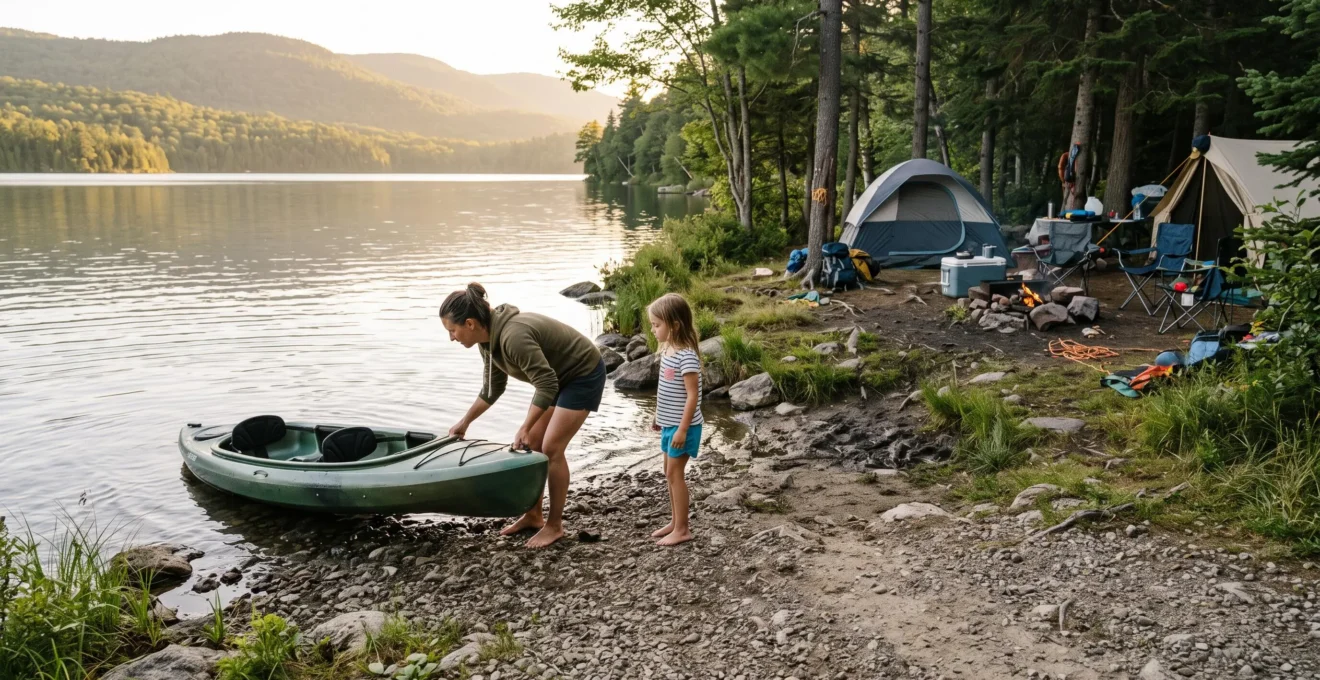
A peaceful lake beside a campsite can appear untouched, yet its shallow edges may contain fish eggs, aquatic plants, insect larvae and other organisms that are easily disturbed. Swimming, kayaking, washing equipment and fishing all create opportunities for environmental damage, even when visitors intend to leave the area as they found it.
Protecting freshwater habitats does not mean giving up these activities. It means choosing established access points, keeping chemicals out of natural water, preventing invasive species from travelling between lakes and avoiding sensitive wildlife areas.
Small decisions become especially important around popular campgrounds, where repeated footsteps, boat launches and washing routines can concentrate damage in the same places. A shoreline that tolerates occasional careful use may deteriorate under constant disturbance.
The most effective approach begins before entering the water: inspect equipment, observe the shoreline, check local restrictions and select activities that suit the conditions. These habits help preserve the ecosystems that make lakes and rivers worth visiting.
Freshwater-friendly camping essentials
- Clean, drain and dry boats, boots and paddling equipment before moving between water bodies.
- Keep soaps, dishwater, food waste and personal-care products out of lakes and streams.
- Use established water access points, avoid spawning habitats and handle caught fish carefully.
- How to Clean Kayaks and Boots Without Spreading Killer Invasive Species?
- The Chemical Mistake That Kills Aquatic Life Downstream of Your Campsite?
- When Should You Stay Out of Shallow Lake Edges to Protect Spawning Fish?
- How to Enter Water Without Destroying the Vegetation That Protects Young Fish?
- Should You Report Cloudy Water or Strange Smells in Lakes Near Your Campsite?
- The Treading Mistake That Damages 200-Year-Old Tree Roots in Ancient Woodlands?
- Why You Should Never Swim Near Drainage Pipes or Outflow Points?
- How to Fish for Trout Responsibly Using Catch-and-Release Practices?
How to Clean Kayaks and Boots Without Spreading Killer Invasive Species?
Clean kayaks, boots, paddles and other wet equipment before moving between lakes or rivers. Remove visible organisms and debris, drain every compartment and allow equipment to dry thoroughly. Where available, use an approved hot-water cleaning station. These precautions reduce the risk of transporting invasive species that may be too small to see.
A kayak can look spotless while carrying unwanted organisms in trapped water, hull fittings or damp accessories. Zebra mussel larvae may travel in retained water, while fragments of Eurasian watermilfoil can attach to equipment. Didymo, an invasive freshwater diatom in some regions, can also spread through contaminated recreational gear.
The danger is not limited to organisms visible on the hull. Mud, sand and damp material can conceal biological contamination. Introducing organisms into a previously unaffected watershed can create ecological problems that are difficult to reverse.
The National Park Service recommendations for cleaning, draining and drying water equipment provide a practical prevention framework.
A practical campsite routine follows three stages:
- Clean: Inspect the hull, paddles, boots, life jackets and accessories. Remove attached plants, mud and other debris. Collect the material for appropriate disposal rather than returning it to another water body.
- Drain: Empty compartments, bilges, livewells and any other spaces holding water. Use designated drainage and cleaning areas where provided.
- Dry: Open compartments and expose equipment to air until thoroughly dry. The National Park Service describes at least five days of drying as general guidance, but requirements vary by organism and location.
Professional cleaning stations may use high-pressure water heated to approximately 120–140 °F (49–60°C). This is equipment-cleaning guidance, not an invitation to handle dangerously hot water without suitable facilities. Household bleach and other chemical disinfectants should not be improvised: they may harm people and the environment.
Porous equipment requires particular attention. Felt-soled wading boots, absorbent ropes and padded accessories can retain moisture and organic material in places that are difficult to inspect. Some jurisdictions restrict felt soles or specify additional treatment. Replacing difficult-to-clean equipment with more manageable alternatives may be appropriate for frequent travellers.
When hot water is unavailable, remove debris, drain thoroughly and dry the gear while checking local requirements. Wiping wet equipment is not a universal substitute for complete drying or approved decontamination.
For multi-day trips, dedicating one equipment set to a single watershed is often simpler than repeatedly changing lakes. Before departure, identify local inspection stations and any mandatory cleaning procedures. If gear cannot be treated adequately between destinations, postpone its use in the next water body.
Five checks before launching in another lake
- Inspect the kayak hull and fittings; confirm that no visible plants or mud remain.
- Empty every water-holding compartment; verify that no transport water remains.
- Inspect boots, paddles and life jackets; identify any damp or difficult-to-clean areas.
- Check destination-specific cleaning requirements; confirm whether additional treatment or inspection is required.
- Verify that equipment meets the destination’s cleaning and drying rules before launching.
Preventing biological transfers protects more than the next paddling destination. It helps preserve the ecological relationships between native plants, fish and invertebrates that make freshwater recreation possible.
The Chemical Mistake That Kills Aquatic Life Downstream of Your Campsite?
Washing dishes, bathing or rinsing soapy equipment directly in a lake or river can introduce substances that aquatic organisms do not need and may not tolerate. Even biodegradable soap can affect water quality. Collect washing water, use designated disposal facilities where available and keep wastewater away from natural water sources.
Campers sometimes assume that moving water will immediately dilute detergents and personal-care products. Yet small streams, sheltered bays and shallow margins may have limited water exchange. These are also habitats for aquatic insect larvae, amphibians and juvenile fish.
The label “biodegradable” describes a material’s potential to break down under suitable conditions. It does not establish that the product is harmless when released directly into a lake. Biodegradation depends on environmental conditions, microbial activity and time.
According to Leave No Trace guidance on disposing of wastewater and campsite waste, campers should carry washing water at least 200 feet (approximately 61 metres) from natural water sources and minimize soap use. This is outdoor-ethics guidance rather than a universal legal distance.
Developed campgrounds may require wastewater to be disposed of at designated facilities instead of on surrounding soil.
A water-conscious camp kitchen begins before washing. Scrape plates thoroughly, collect food scraps and pack out cooking grease. Hot water and physical scrubbing can reduce the amount of detergent needed. Strain used dishwater and retain the collected solids for disposal with other food waste.
Personal-care products deserve similar attention. Sunscreen, insect repellent, lotion and body oils can enter freshwater during recreation. Certain sunscreen ingredients, including some organic UV filters, have raised environmental concerns, although their effects depend on formulation, exposure and local conditions. A single ingredient label does not establish the ecological safety of an entire product.
Reduce unnecessary chemical inputs by wearing protective clothing, applying products according to their instructions and avoiding washing treated skin or clothing directly in natural water. Keep detergents and cleaning agents away from the shoreline.
Different wastewater streams call for different handling:
| Wastewater type | Preferred handling | What to avoid |
|---|---|---|
| Dishwashing water | Strain and use designated disposal facilities, or disperse broadly over suitable soil where permitted | Pouring into lakes, streams or drainage channels |
| Bathing water | Wash away from natural water sources and follow campground disposal rules | Using soap while standing in the lake |
| Food grease | Collect and pack out in a suitable container | Discharging into water or onto the shoreline |
| Chemical cleaning solutions | Follow product instructions and facility-specific disposal requirements | Scattering hazardous residues over soil |
When land disposal is allowed, use an appropriate location away from water, campsites and sensitive vegetation. Do not assume that every kind of greywater is suitable for dispersal. Wastewater containing hazardous cleaning chemicals requires different handling.
Preventing pollution at the campsite also protects swimmers and paddlers downstream, where contaminants may enter water used by other visitors.
When Should You Stay Out of Shallow Lake Edges to Protect Spawning Fish?
Stay out of shallow areas when fish are spawning, when nests or redds are visible, or when local authorities restrict access. Fish eggs can be damaged by footsteps, paddles and disturbed sediment. Because spawning periods differ between species and regions, check local wildlife guidance rather than relying on a single seasonal calendar.
Many freshwater fish reproduce in habitats that also attract campers: sheltered margins, gravel beds and relatively shallow water. These locations may offer suitable oxygen conditions, shelter or substrate for developing eggs.
Trout often deposit eggs in gravel nests called redds. Disturbing these areas can displace gravel and damage eggs or developing embryos. Bass may guard nests in shallow areas, while perch use different reproductive strategies, including depositing strands of eggs on submerged structures or vegetation.
Not all fish spawn in the same season or habitat. Spring is important for numerous warm-water species, while some trout populations spawn in autumn or winter. Other species and regional populations follow different schedules.
Several shoreline observations should prompt additional caution:
- Gravel patches that appear unusually clean or disturbed compared with surrounding substrate.
- Fish repeatedly occupying a small shallow area or showing territorial behaviour.
- Concentrations of fish near inflows, submerged structures or sheltered margins.
- Posted spawning closures or habitat-protection notices.
These observations are clues, not reliable proof of active spawning. A clean gravel patch may have an unrelated explanation, and some eggs remain concealed. Where uncertainty exists, avoiding sensitive shallows is preferable to investigating them by wading.
Shoreline type also matters. An established sandy swimming beach may provide a more suitable entry location than a vegetated bay or suspected spawning gravel. However, sandy areas are not automatically ecologically insensitive or safe; local restrictions and wildlife activity still take priority.
Families can redirect shallow-water play toward designated beaches, supervised swimming areas or shore-based activities that do not require entering habitat. Children can observe fish from a dock or established path without approaching nests.
Protecting eggs and nesting habitat is only part of responsible access. The route used to reach the water can also determine whether juvenile fish retain the vegetation they depend on.
How to Enter Water Without Destroying the Vegetation That Protects Young Fish?
Enter lakes and rivers through existing beaches, launch ramps, docks or established access points rather than pushing through shoreline vegetation. Avoid dragging boats across plants or repeatedly climbing unstable banks. Concentrating access at suitable, already-used locations helps protect the aquatic vegetation and root systems that shelter young fish.
Freshwater margins are transition zones between land and water. Emergent plants, submerged vegetation and overhanging roots create complex habitats where juvenile fish can shelter from predators and find food.
These plants also influence sediment movement. Root networks can stabilize banks, while vegetation slows water movement and traps suspended particles. Removing plants may expose soil to erosion, allowing sediment to enter nearby aquatic habitats.
Excess sediment can cover gravel spaces used by spawning fish and alter habitat conditions for aquatic invertebrates. The effects depend on the site, but repeated disturbance can gradually change an otherwise stable shoreline.
Choose an entry point by checking three features: existing human access, the condition of the bank and the presence of sensitive habitat. A maintained launch or designated swimming beach is generally preferable to a shortcut through reeds.
For kayak and canoe users, prepare equipment on durable ground before approaching the water. Carry the craft to the established launch rather than dragging it through vegetation. Where depth and footing permit, float the boat into sufficiently deep water before boarding.
Do not assume that a rocky or gravelly margin is automatically suitable. Loose stones, steep banks, fish nests and local access restrictions may make a seemingly durable surface inappropriate.
A useful distinction from some backcountry travel advice concerns concentrating rather than spreading impact. On established shorelines, using an existing durable access point can prevent the creation of multiple damaged tracks. Spreading entry points across intact vegetation would expose a larger area to disturbance.
That does not justify repeatedly using an eroding or prohibited path. If an access point is deteriorating, use an approved alternative and inform campground staff when appropriate.
Once in the water, continued observation matters. Unusual colour, odours or surface conditions may indicate a problem that deserves attention before swimming or paddling continues.
Should You Report Cloudy Water or Strange Smells in Lakes Near Your Campsite?
Yes. Report unusual water conditions when they suggest pollution, harmful algal growth or wildlife distress, especially if the change is sudden or widespread. Photograph the area from a safe location, record the time and identify nearby landmarks. Avoid swimming in suspicious water and contact the appropriate park, health or environmental authority.
Not every unusual appearance indicates contamination. Rainfall can introduce natural sediment, while seasonal changes may affect water colour or odour. Nevertheless, some observations justify precaution because campers cannot reliably identify pollutants without testing.
Potential warning signs include:
- Green surface scum or paint-like streaks: possible cyanobacterial growth or other algal material.
- Milky or unusually cloudy water: potentially suspended sediment, runoff or another disturbance.
- Rotten-egg or chemical odours: possible decomposition, low-oxygen conditions or contamination.
- Persistent foam or oily-looking sheens: potentially natural organic material or pollution requiring investigation.
- Dead or distressed fish: possible environmental stress, disease or a water-quality incident.
Appearance alone cannot establish the cause. Natural materials can produce foam or surface films, and contaminated water may appear completely clear.
Cyanobacterial blooms deserve particular caution. Some produce toxins capable of harming people, pets and livestock. Children and dogs may be especially exposed when they swallow contaminated water.
The EPA recommendations for identifying and reporting harmful algal blooms explain that suspected blooms can be reported to relevant authorities and that testing may be needed to establish toxicity.
A useful report includes the location, date, approximate time, photographs, observed conditions and any visible wildlife impacts. Note nearby landmarks or the name of the campground. Do not enter suspicious water to collect samples unless specifically directed by qualified authorities.
In the United States, state environmental or health departments may handle harmful bloom reports. In other English-speaking countries, the appropriate contact may be a regional environmental regulator, public-health authority, local council or park management office.
Reporting does not guarantee that a water body will be tested or that a closure will be prevented. Authorities may review observations, compare existing monitoring information, investigate or issue advice according to their procedures and available resources.
Even a modest observation can be useful when monitoring coverage is limited. The purpose is to communicate credible warning signs, not to diagnose the problem independently.
Water quality is not the only concern around lakeside campsites. Physical damage to established tree roots can also destabilize the same margins that protect aquatic habitat.
The Treading Mistake That Damages 200-Year-Old Tree Roots in Ancient Woodlands?
Standing, kicking or repeatedly climbing over exposed tree roots along wooded shorelines can damage fragile root structures and disturb the soil supporting mature trees. Avoid using roots as footholds when entering or leaving the water. Choose established access points with stable footing, especially near large, old trees and erosion-prone banks.
In established woodlands, mature trees may extend structural roots across the shoreline or into shallow water. These roots help anchor the tree and stabilize surrounding soil.
Large woody roots provide mechanical support, while finer roots are important for water and nutrient uptake. Repeated trampling can damage fine roots, compact surrounding soil and reduce the conditions needed for healthy root function.
A single accidental touch should not be equated with the death of a mature tree. The concern is cumulative disturbance, particularly where many visitors repeatedly use the same exposed root system for access.
The reference to 200-year-old trees illustrates the potential age of mature woodland habitats, not a reliable way to determine the age of any particular tree. Tree age varies considerably by species, site and growing conditions.
Features that may indicate a long-established root environment include large trunks, extensive exposed roots, irregular woody structures and mature moss or epiphyte communities. None establishes an exact age without further evidence.
For swimmers, the practical alternative is to enter from a designated beach or stable access point without stepping on roots. Children should be encouraged to avoid using root tangles as climbing frames or underwater footholds.
Damage can extend beyond the tree itself. Where root loss and soil disturbance weaken a bank, erosion may increase. Sediment can enter the water, and the resulting change in shoreline structure may reduce habitat for aquatic plants and animals.
Overhanging branches and roots can also provide shade and cover for fish. Preserving the shoreline tree therefore supports both terrestrial and aquatic habitat functions.
Wooded banks deserve careful treatment, but some locations should be avoided for an additional reason: the possibility of contaminated discharge entering the water nearby.
Why You Should Never Swim Near Drainage Pipes or Outflow Points?
Avoid swimming near drainage pipes, wastewater outfalls and other discharge points because they may release contaminated water or create unpredictable local conditions. Harmful microorganisms and pollutants are not always visible or detectable by smell. Use designated swimming areas and follow local water-quality advisories instead of assuming that clear water near an outfall is safe.
Not every pipe discharges sewage. Some carry stormwater, treated wastewater or other permitted flows. Nevertheless, the type and quality of discharge may be difficult for a visitor to identify.
Stormwater can carry material washed from roads, campsites and agricultural land. Depending on the catchment, this may include sediment, nutrients, animal waste and other contaminants.
Wastewater discharges may be regulated and treated, but their presence does not automatically establish that the immediate surrounding water is suitable for recreation. Conditions can change with rainfall, treatment performance and flow patterns.
Visible warning signs include discoloured water, persistent foam, unusual surface streaks or concentrated debris. Drainage infrastructure may be found near roads, developed campground facilities, agricultural land and urbanized shorelines.
However, the absence of visible warning signs does not prove swimming safety. Bacteria and other microorganisms cannot be reliably assessed by looking at the water.
There is no universal safe swimming distance from every discharge pipe. Risk depends on the type of discharge, local currents, dilution, monitoring results and applicable restrictions. A guessed buffer is not a substitute for official advice.
Where an outfall is present, choose a designated swimming area away from it. Check posted notices and water-quality information, particularly after heavy rainfall or known overflow events.
Nutrient pollution also affects aquatic ecosystems. Excess nitrogen and phosphorus can encourage algal growth under suitable conditions. Some harmful blooms contribute to oxygen depletion, creating stressful or dangerous conditions for fish and other aquatic organisms.
Swimming elsewhere does not remove existing pollution, but it reduces unnecessary exposure and avoids adding recreational disturbance to a potentially stressed location.
Choosing safer water also means respecting the fish already living there. For campers who enjoy angling, responsible catch-and-release techniques offer another opportunity to reduce direct impacts.
Key takeaways before fishing
- Protect spawning habitat first: a carefully released fish cannot compensate for damage to vulnerable eggs and nests.
- Prepare suitable equipment before casting so handling time and unnecessary stress can be minimized.
- Check local fishing regulations and environmental conditions before deciding whether to fish at all.
How to Fish for Trout Responsibly Using Catch-and-Release Practices?
Responsible trout catch-and-release fishing means landing fish promptly, minimizing handling and air exposure, and returning them gently to suitable water. Use appropriate hooks and a fish-friendly landing net, wet your hands before contact and support the trout horizontally. Always check local regulations and avoid disturbing spawning fish or their gravel nests.
Returning a trout to the water does not guarantee its survival. Stress and injury can occur during hooking, fighting, landing and handling, even when a fish appears to swim away normally.
The goal is to reduce avoidable harm throughout the process, beginning with tackle selection. Equipment should be suitable for the size of trout expected and strong enough to avoid unnecessarily prolonged fights.
Barbless hooks or hooks with crushed barbs can simplify removal. Hook design should match the fishing technique and applicable regulations rather than being selected according to a universal rule.
A wet, knotless or rubber landing net can reduce damage to scales, fins and protective mucus. Keep the fish in the water whenever practical and remove the hook with suitable tools.
If handling is necessary, wet your hands first. Support the body horizontally and avoid touching the gills or eyes. Never suspend a trout vertically by its jaw for a photograph.
Photography should be secondary to fish welfare. Prepare the camera before lifting the fish, minimize any time out of water and return it immediately if handling becomes prolonged.
NOAA Fisheries’ catch-and-release guidance emphasizes appropriate gear, minimal handling, limited air exposure and careful release. Its general advice describes less than 60 seconds of air exposure as preferable when removal is unavoidable, but this is not a guaranteed safe duration for trout. Keeping the fish in the water is better whenever possible.
For release, support the trout in the water with its head facing into a natural current where appropriate. Allow water to pass through the gills and release the fish when it can maintain its position and swim independently. Avoid forcefully pushing it back and forth.
Environmental conditions also matter. Warm water and low oxygen can increase stress for cold-water fish. When conditions are unsuitable, postponing fishing may be more responsible than relying on careful handling alone.
Spawning areas deserve additional protection. Trout redds can contain developing eggs beneath gravel, and wading or fishing directly over these areas may disturb reproduction even when every captured fish is released.
Licensing, seasons, permitted tackle, protected areas, size limits and bag limits differ across jurisdictions. Some fisheries impose specific catch-and-release rules or temporary closures. Check the relevant fishing authority’s current requirements before each trip.
Before the next campsite fishing session, confirm the rules, prepare fish-safe equipment and assess water conditions. If the habitat or fish cannot be protected adequately, choose another activity until conditions improve.
Can you swim in a lake without disturbing its ecosystem?
Swimming can have a relatively low impact when visitors use designated access points, avoid aquatic vegetation and spawning areas, and keep soaps and other unnecessary contaminants out of the water. Follow local restrictions and avoid entering areas with suspected harmful algal blooms or pollution.
Is it safe to move a kayak between lakes on the same day?
Moving between lakes can spread invasive organisms if equipment has not been adequately cleaned, drained and dried or otherwise treated according to local requirements. Same-day transfers may require an approved decontamination station. If appropriate treatment is unavailable, do not assume that a quick rinse is sufficient.
Can biodegradable camping soap be used directly in a river?
No. Biodegradable soap can still affect freshwater quality. Collect washing water and keep it away from lakes and rivers. Leave No Trace recommends a separation of at least 200 feet (approximately 61 metres), while campground rules may require designated wastewater disposal facilities.
What should campers do if a dog swims through suspicious green water?
Remove the dog from the water, prevent it from licking contaminated fur and rinse it with clean fresh water while protecting yourself from exposure. Contact a veterinarian promptly if a harmful algal bloom is suspected, even before symptoms appear. Report the suspicious water to the relevant authority and keep people and animals away until conditions are assessed.
How can campers tell whether a lakeshore is suitable for launching a canoe?
Look for an authorized, established access point with stable footing and minimal vegetation disturbance. Avoid reed beds, exposed tree roots, eroding banks and suspected spawning areas. A maintained ramp or designated launch is generally preferable to creating a new route through intact shoreline habitat.